Jaw Crusher Working Principle and Structure Guide: A Zero-Basics Manual for Equipment Selection and Operation
Introduction
The jaw crusher is the most widely used primary crushing equipment in mining, construction, and metallurgy industries, commonly known as the “tiger mouth.”
This article explains its working principle, core structure, and key parameters in plain language, helping procurement personnel and novice operators quickly build systematic knowledge and avoid common selection mistakes.
Section 1: What Is a Jaw Crusher?
A jaw crusher is a mechanical device that crushes large materials into smaller pieces through the squeezing action of two jaw plates.
It serves as the “first checkpoint” in a crushing production line, typically processing raw materials with diameters of 500–1500 mm and reducing them to below 100 mm for downstream equipment.
Industry Position
Most widely used primary crushing equipment
Suitable for various hard rocks and ores
(compressive strength ≤ 320 MPa)Used in over 80% of aggregate production projects as the first-stage crusher
Section 2: Working Principle
2.1 Core Working Process(Four-Step Cycle)
The jaw crusher operates via reciprocating compression, which can be visualized as mechanical chewing.
Step 1: Feeding
Raw materials enter the crushing chamber (V-shaped space formed by fixed and movable jaw plates) through the top feed opening.
Step 2: Compression
The motor drives the eccentric shaft through a belt pulley, causing the movable jaw to approach the fixed jaw.
Materials are crushed by compression, splitting, and bending forces.
Step 3: Discharge
When the movable jaw retreats, materials smaller than the discharge opening fall out by gravity.
Step 4: Cycling
Oversized materials remain in the chamber and continue crushing until meeting size requirements.
Key Concept: Reduction Ratio
Reduction Ratio = Feed Size ÷ Discharge Size
Typical jaw crusher reduction ratio: 4:1 – 6:1
Example: 500 mm → 80–125 mm
2.2 Two Main Structural Types
| Type | Structural Characteristics | Application Scenarios | Pros & Cons |
|---|---|---|---|
| Single Toggle | One toggle plate, eccentric shaft at top, complex swing | Medium-hard materials, small–medium lines | Simple, light, low cost; faster jaw wear |
| Double Toggle | Two toggle plates, eccentric shaft in middle, pure reciprocating | High-hardness ores, large mines | Strong force, uniform wear; higher cost |
Market Status
Over 90% of commercial jaw crushers adopt the single toggle design due to superior cost-performance and easier maintenance.
Section 3: Core Structural Components
According to GB/T 25703-2010 “Jaw Crusher”, jaw crushers mainly consist of the following components:
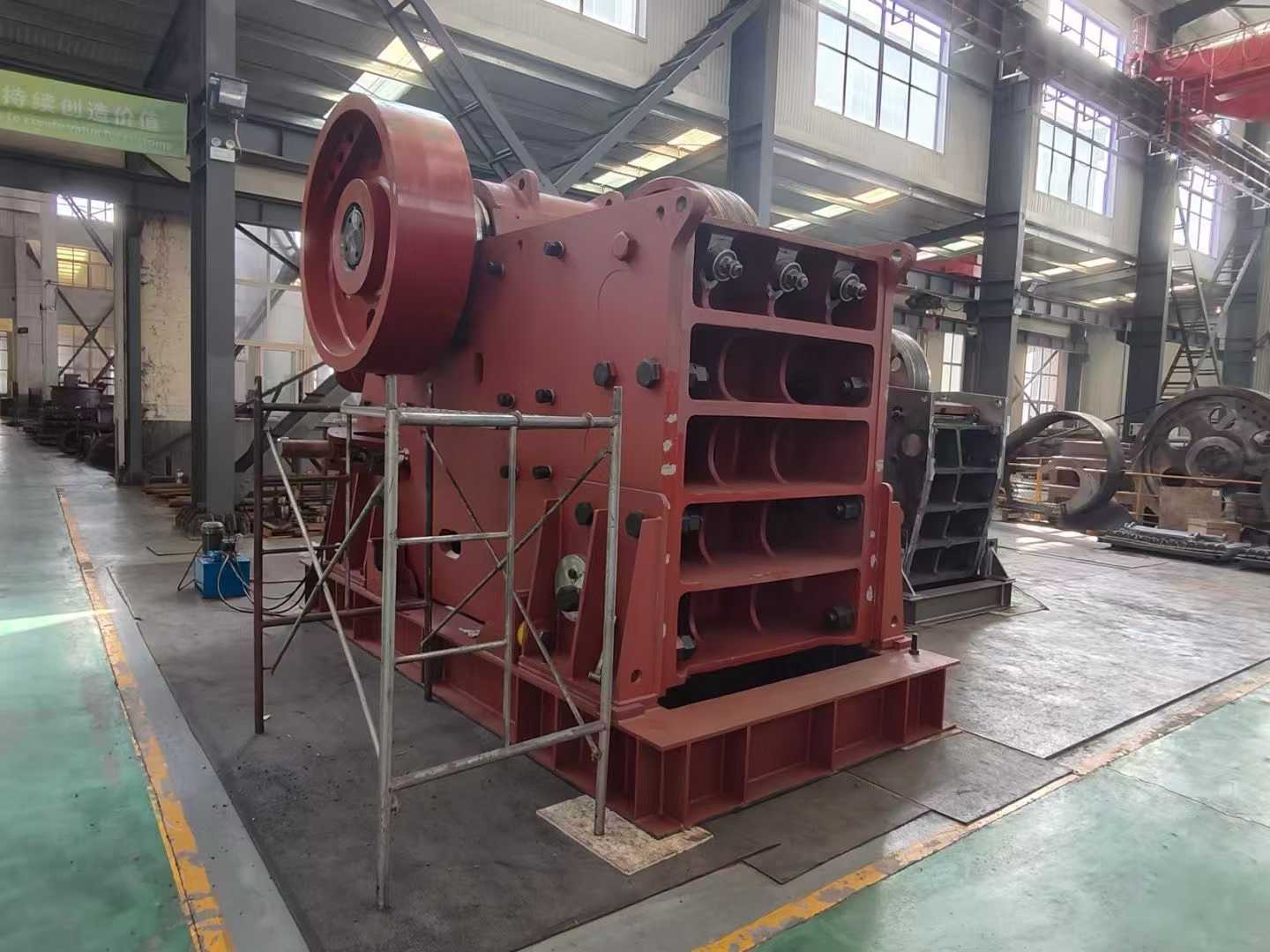
3.1 Frame— Backbone of the Machine
Function: Bears all crushing reaction forces
Material: Medium-carbon steel casting or welded steel plate
Key Point: Welded frames must include reinforcing ribs to prevent fatigue cracking
3.2 Jaw Plates— Core Wear Parts
Fixed Jaw Plate: Mounted on frame front wall, stationary
Movable Jaw Plate: Fixed on movable jaw body, reciprocates
Material: High manganese steel (ZGMn13)
Surface: Wavy tooth pattern for enhanced crushing
Service Life
Hard rock: 3–6 months
Soft materials: 1–2 years
Cost-Saving Tip
Jaw plates can be flipped and reused, doubling service life.
3.3 Eccentric Shaft Assembly
Components: Eccentric shaft, flywheel, pulley, bearings
Function: Converts rotary motion into jaw reciprocation
Key Parameter: Eccentricity (determines stroke & capacity)
Material: High-strength alloy steel (quenched & tempered)
3.4 Toggle Plate— Safety Protection Device
Functions: Power transmission + overload protection
Protection Principle: Breaks first when uncrushable objects enter
Replacement cost ≈ 1–2% of machine price
Prevents repair losses of tens of thousands of dollars
3.5 Adjustment Device
| Type | Characteristics |
|---|---|
| Shim Adjustment | Requires shutdown, 30–60 min |
| Hydraulic Adjustment | No shutdown, 2–5 min, +50% efficiency |
3.6 Lubrication System
Grease every 8 hours
Recommended: MoS₂ lithium-based grease
Bearing temperature ≤ 70°C (mandatory standard)
3.7 Drive System
Configuration
Motor → Belt Pulley → Flywheel → Eccentric Shaft
Power Range
5.5 kW (lab) → 220 kW (large mining)
3.8 Other Important Components
| Component | Function | Maintenance |
|---|---|---|
| Side Plates | Protect frame | Replace with jaw plates |
| Tension Rod | Maintains toggle pressure | Check spring fatigue |
| Locking Spring | Prevents shim loosening | Check preload |
| Bearing Housing | Shaft support | Dust sealing |
Section 4: Core Technical Parameters
4.1 Model Naming Rule
| Code | Meaning |
|---|---|
| PE | Primary jaw crusher |
| 600×900 | Feed opening width × length (mm) |
4.2 Six Key Parameters
| Parameter | Typical Range | Selection Logic |
|---|---|---|
| Feed Opening | 125×250 – 1200×1500 mm | ≥ 1.25× max feed |
| Max Feed Size | ≈ 80% opening width | Oversize causes jamming |
| Discharge Opening | 10–300 mm | Match downstream |
| Capacity | 1–1000+ t/h | Reserve 20% margin |
| Shaft Speed | 180–350 rpm | Low for hard rock |
| Motor Power | 5.5–220 kW | Prevent stalling |
4.3 Selection Example
Material: Granite
Feed: 500 mm
Discharge: ≤100 mm
Capacity: 100 t/h
Result
Required feed opening ≥ 625 mm
Reduction ratio = 5:1 ✔
Selected model: PE-750×1060
Motor: 110 kW
Section 5: Advantages & Limitations
Simple structure, low failure rate
Strong adaptability to wet & sticky materials
Energy consumption: 1.2–1.5 kWh/t
Low foundation requirements
Flaky product shape
Limited fine crushing ability
Noise ~85 dB, dust control required
Section 6: Selection Guide
| Scenario | Recommended Features | Notes |
|---|---|---|
| Hard Rock Mining | Large stroke, hydraulic protection | Focus on bearing temp |
| Construction Waste | Mobile type + iron remover | Pre-sort debris |
| Medium Lines | PE-600×900 | Avoid full-chamber feed |
| High Abrasion | Wear-resistant jaw plates | Weekly inspection |
Section 7: Operation & Maintenance
Pre-Startup Checklist
□ Jaw bolts tight
□ Grease level OK
□ Discharge opening set
□ Chamber clear
□ Grounding ≤ 4 Ω
Operating Monitoring
Bearing temp < 70°C
Current fluctuation < 10%
No abnormal metal sounds
Conclusion
As the vanguard of crushing production lines, the stable operation of jaw crushers directly determines overall output.
For beginners, mastering the logic chain:
Working Principle → Structure → Parameters → Selection
can avoid most purchasing mistakes.
Procurement Tip
Always request material test crushing reports, and verify performance with real data rather than relying solely on parameter tables.